
Published by Geospectra Geotechnical Pvt. Ltd. — Nov 27, 2025
Role of Non-Destructive Testing (NDT) in Modern Civil Engineering
Non-Destructive Testing (NDT) enables engineers to assess the condition, strength, and durability of structures without damaging them. With increasing focus on safety, retrofitting, and life-cycle assessment, NDT has become an essential tool for buildings, bridges, industrial plants, and infrastructure audits.
Why NDT is Important?
NDT helps identify internal defects, deterioration, and material inconsistencies early — allowing engineers to make informed decisions without breaking or damaging structural components.
- Detects cracks, voids, delamination & corrosion
- Evaluates in-situ concrete strength
- Ensures structural reliability before retrofitting
- Reduces maintenance cost & downtime
1. Ultrasonic Pulse Velocity (UPV) Test
UPV measures the velocity of ultrasonic waves passing through concrete. Faster waves indicate strong, dense concrete; slower waves reveal cracks or weak zones.
- Detects internal voids & honeycombing
- Estimates uniformity of concrete
- Useful for bridges, dams & high-rise structures

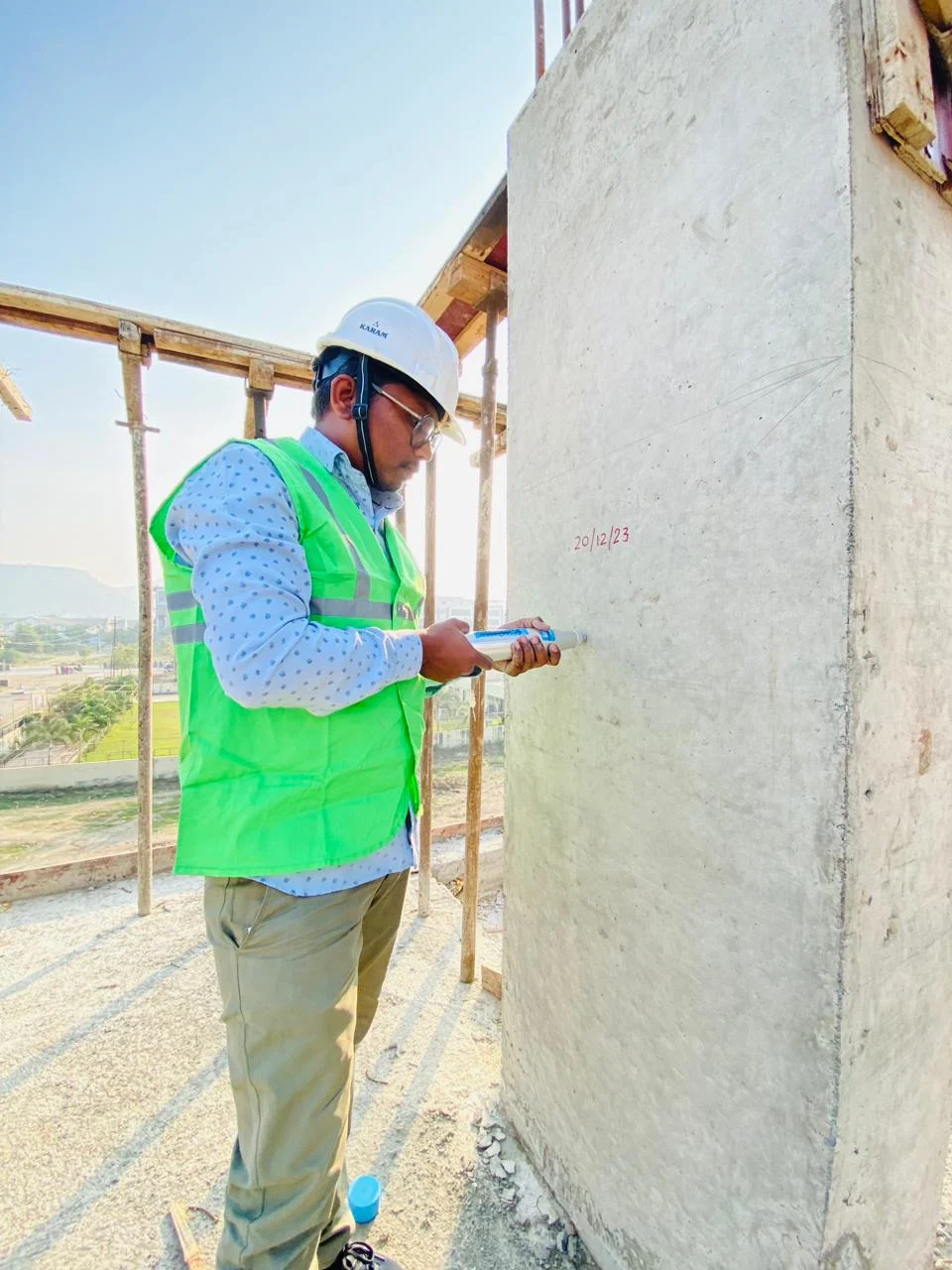
2. Rebound Hammer Test
A widely used surface hardness test that indicates in-situ compressive strength based on rebound index values.
- Quick & economical field test
- Used for quality control during construction
- Suitable for concrete grade estimation

3. Core Cutting & Testing
Core sampling is a semi-destructive test but remains the most accurate method for determining real compressive strength and material condition.
- Provides direct strength measurement
- Used for old & deteriorated structures
- Validates UPV and rebound hammer results

Additional NDT Techniques
- Rebar location & cover measurement (Cover Meter / GPR)
- Half-cell corrosion potential test
- Impact-echo testing
- Thermographic inspection for moisture detection
- Load testing for bridges & slabs

Conclusion
NDT plays a vital role in ensuring structural safety, extending service life, and enabling cost-effective maintenance. Whether it is condition assessment, repair planning, or quality assurance — NDT is now indispensable in civil engineering.
Schedule an NDT Assessment