Published by Geospectra Geotechnical Pvt. Ltd.
Why Geotechnical Investigation is Important Before Construction
Before starting any construction project whether it is a residential building, commercial complex, bridge, factory, or highway understanding the subsurface soil conditions is the most critical step. A proper geotechnical investigation helps engineers design safe foundations, reduce risks, and avoid structural failures.
What is Geotechnical Investigation?
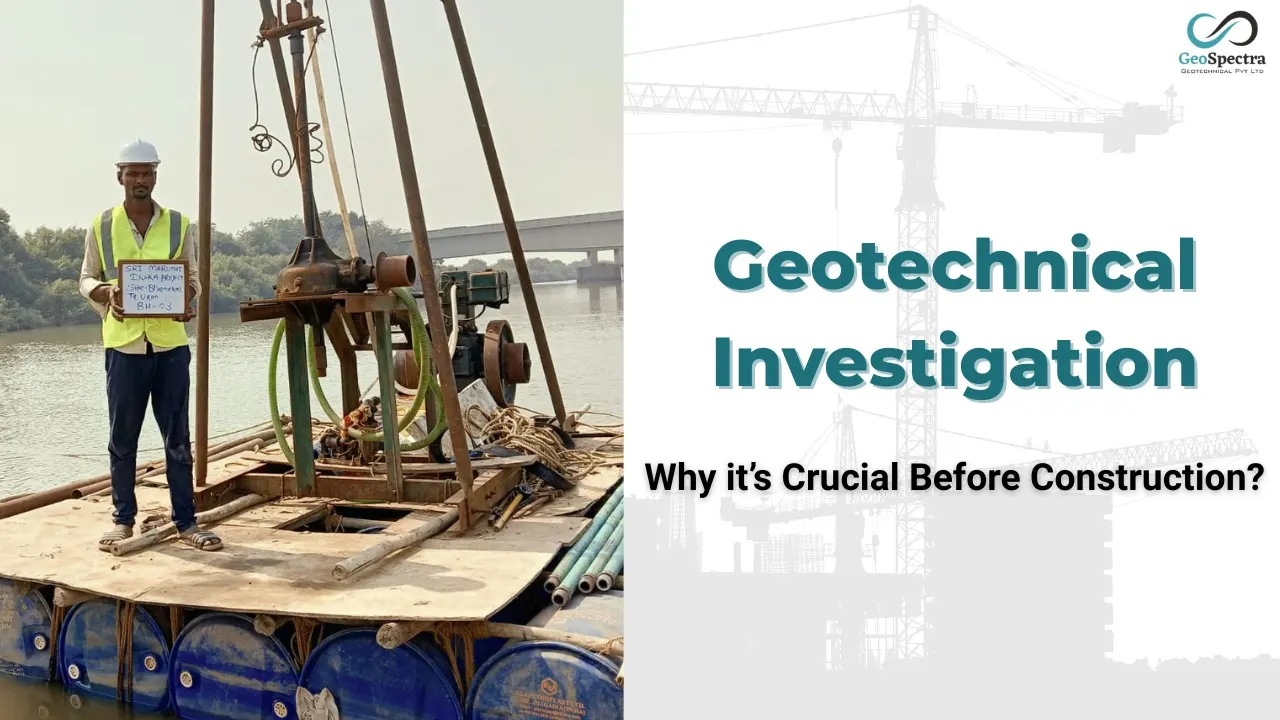
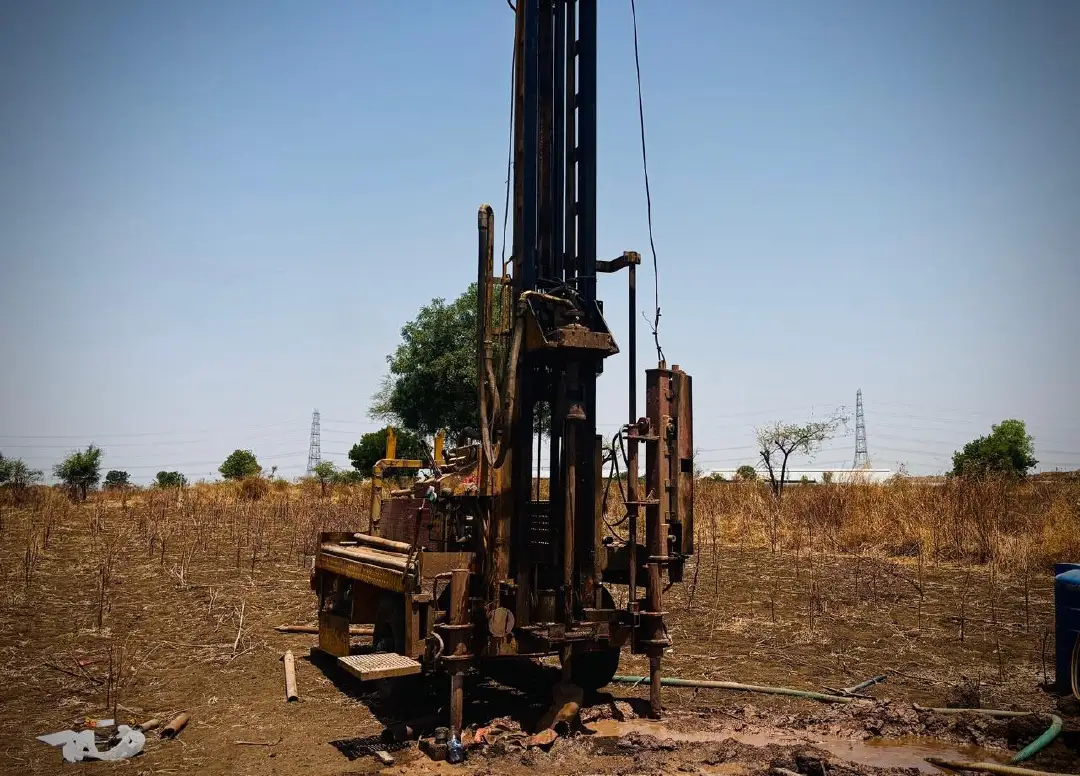
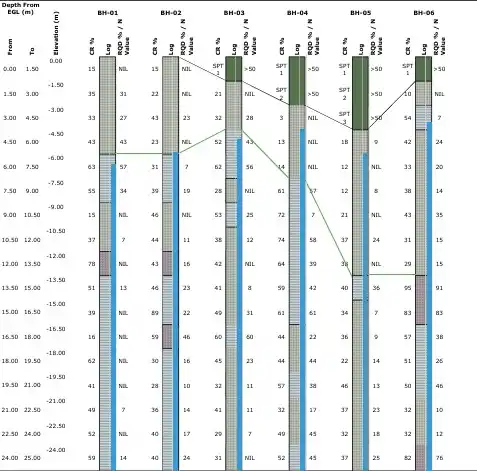
Geotechnical investigation is a detailed scientific study carried out to understand the engineering behaviour of soil and rock at a construction site. It forms the backbone of safe foundation design and is mandatory for most infrastructure, industrial, and real-estate projects across India. The investigation usually begins with borehole drilling, which helps determine the depth and sequence of soil strata, presence of rock layers, and overall subsurface conditions.
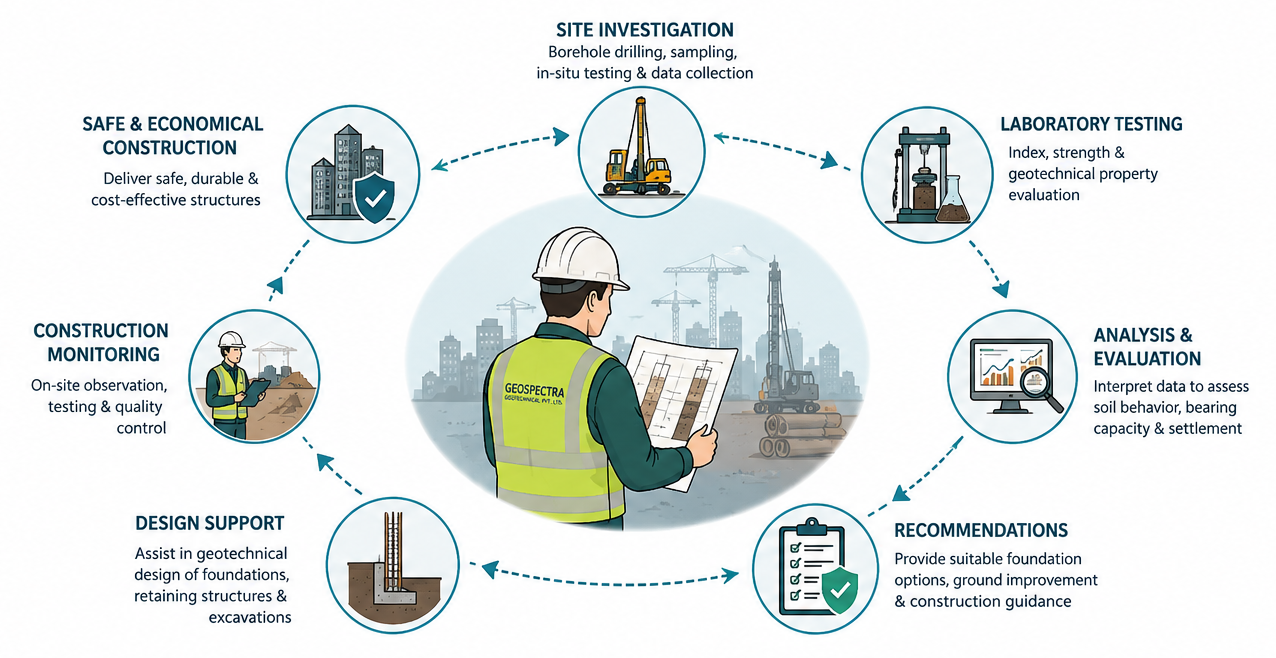
During drilling, field tests such as the Standard Penetration Test (SPT) are performed as per IS 2131:1981 to estimate soil density, relative compaction, and in-situ strength. Accurate measurement of the groundwater table is also taken because fluctuations in water levels can significantly influence bearing capacity and settlement behaviour.
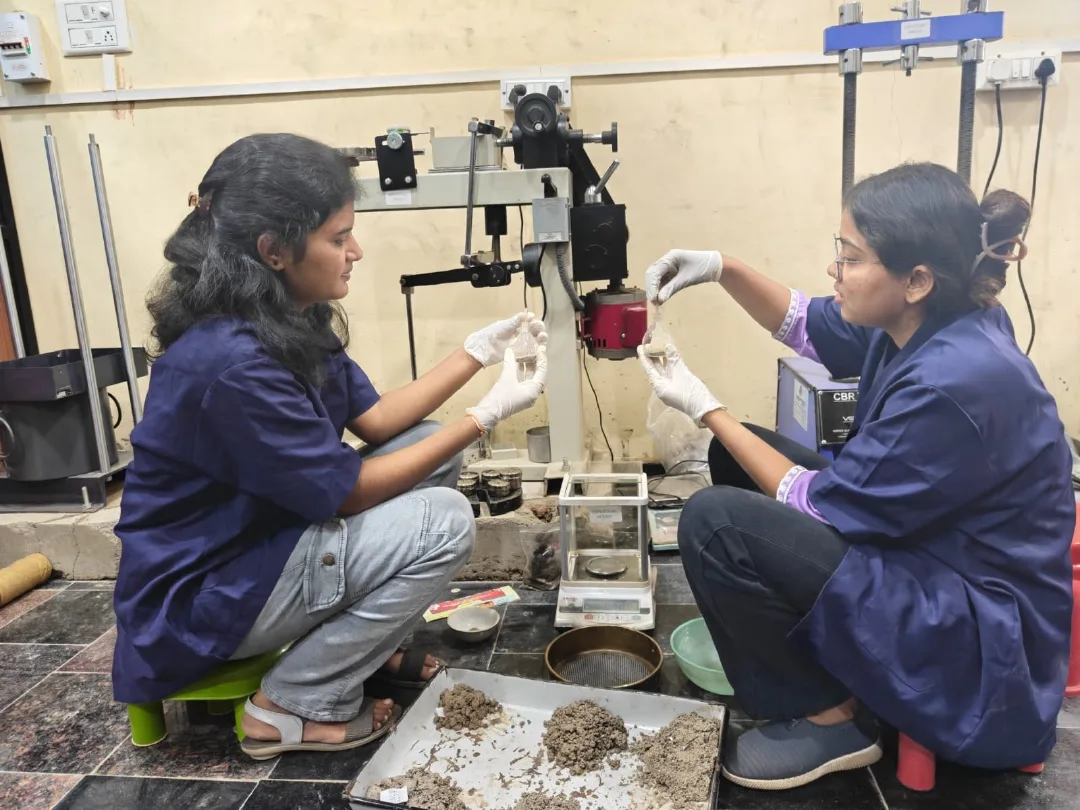
The disturbed and undisturbed samples collected from the boreholes are transported to a NABL-accredited laboratory, where a series of index and strength tests are conducted following IS 2720 (Part 5): 1985 – Methods of Test for Soils: Determination of Liquid and Plastic Limit . These tests typically include grain size analysis, Atterberg limits, specific gravity, moisture content, direct shear test, triaxial test, and unconfined compression tests, depending on the nature of the project.
Once the field and laboratory data are analyzed, a comprehensive Soil Investigation Report (SIR) is prepared. This report provides crucial design parameters such as allowable bearing capacity, settlement estimates, soil modulus, liquefaction potential, and recommendations for suitable foundation systems. A properly executed geotechnical investigation not only ensures safety and compliance with IS codes but also helps optimize construction cost by preventing over-design.
1. Ensures Safe Foundation Design
Geotechnical investigation provides essential engineering data such as:
- Safe bearing capacity (SBC) of soil – IS 6403:1981 SBC Calculation
- Shear strength parameters (c & φ)
- Modulus of subgrade reaction (k)
- Settlement analysis – IS 8009 Settlement of Foundations
- Depth-wise soil profile
This helps structural engineers decide whether the project requires footings, raft, or deep pile foundation.
2. Prevents Structural Failure
Without proper soil investigation, a structure may face issues such as:
- Differential settlement
- Tilt or rotation
- Liquefaction in seismic zones
- Foundation cracks
- Poor retaining wall performance
3. Helps Reduce Construction Cost
Geotechnical investigation avoids:
- Unnecessary deep foundations
- Material over-design
- Costly redesigns
- Excessive dewatering/excavation
4. Required for Government Approvals
Most authorities in India require a geotechnical report before approving construction plans for:
- Multi-storey buildings
- Industrial structures
- Infrastructure projects
5. Supports Structural Design & Planning
- Foundation type selection – footing, raft, or piles
- Retaining wall and basement design
- Ground improvement methods
- Seismic soil behavior assessment
- Dewatering planning
A small investment in geotechnical investigation can save lakhs of rupees in future structural repairs.
Common Geotechnical Tests Conducted
- SPT (Standard Penetration Test)
- Borehole Drilling with sampling
- Plate Load Test
- Compaction Test (Proctor)
- Grain Size Analysis & Atterberg Limits
- CBR Test for Road Projects
- Triaxial & Direct Shear Test
- Unconfined Compressive Strength (UCS) Test
Geotechnical investigation is not just a formality it's the backbone of safe construction. Skipping this step may lead to structural issues, foundation failures, and expensive corrections. Always consult a professional geotechnical company before construction.