Published by Geospectra Geotechnical Pvt. Ltd.
GPR Survey for Solar Projects: Site Investigation Before Solar Plant Installation
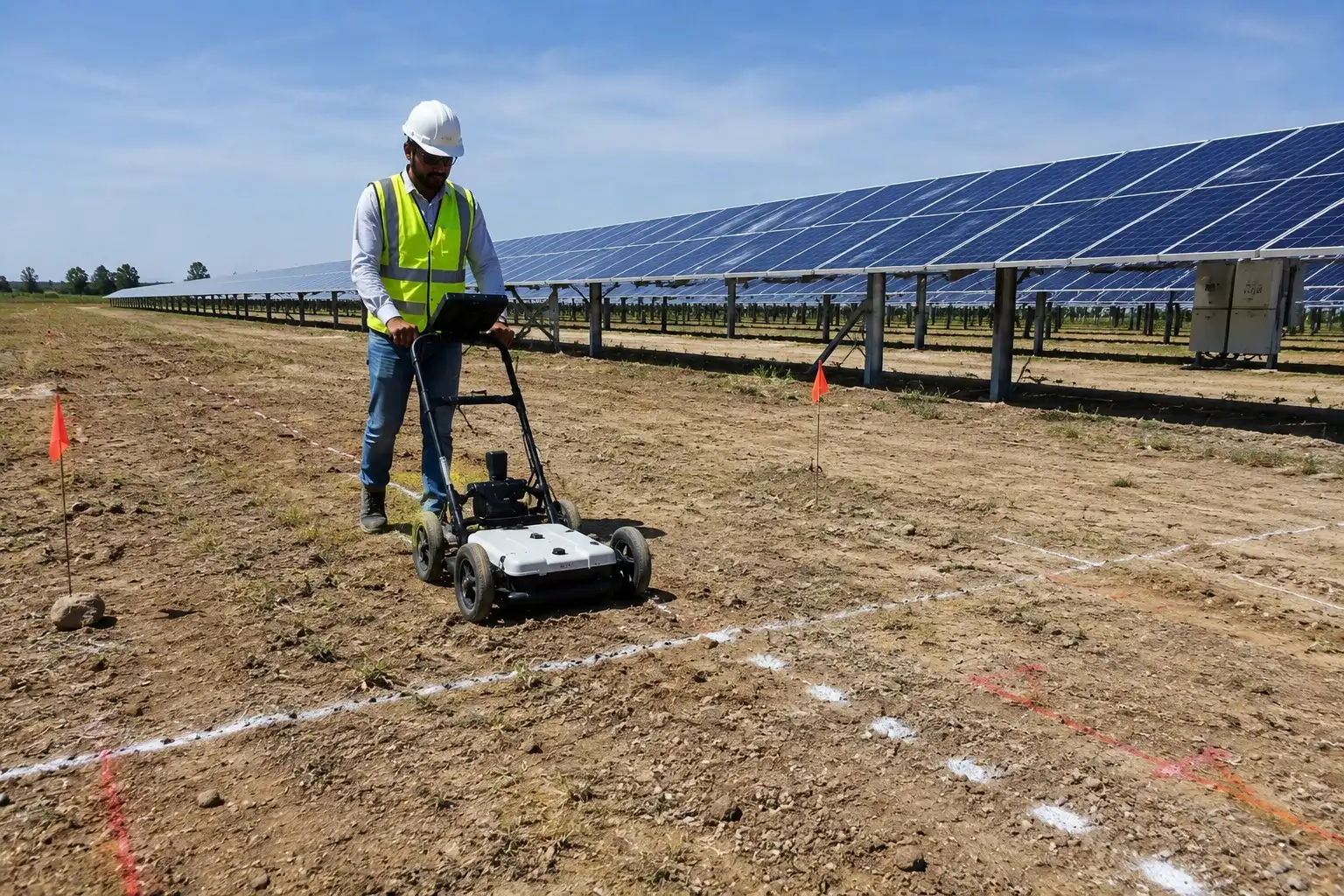
Ground-mounted and rooftop solar projects involve extensive civil works — piling, module foundations, inverter pads, and long stretches of underground cable trenching. Before any of this begins, solar EPC companies need clear visibility into what lies beneath the site. Ground Penetrating Radar (GPR) survey provides that visibility, detecting underground utilities, buried obstacles, and subsurface conditions without a single test pit.
GeoSpectra supports solar EPC contractors and developers across India with GPR survey services designed specifically for solar site investigation — helping avoid utility strikes, construction delays, and rework during piling and cable installation.
What is GPR Survey for Solar Projects?
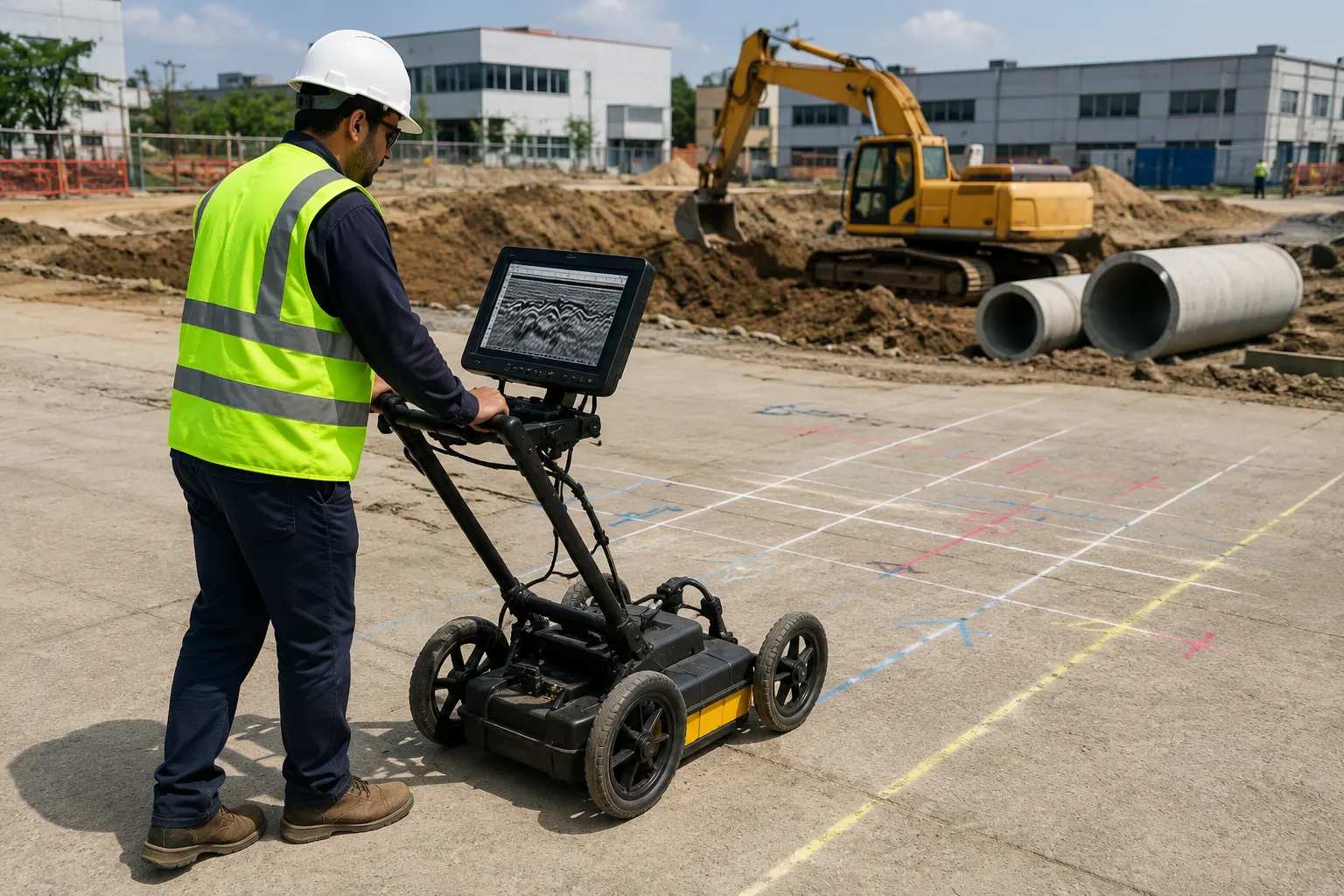
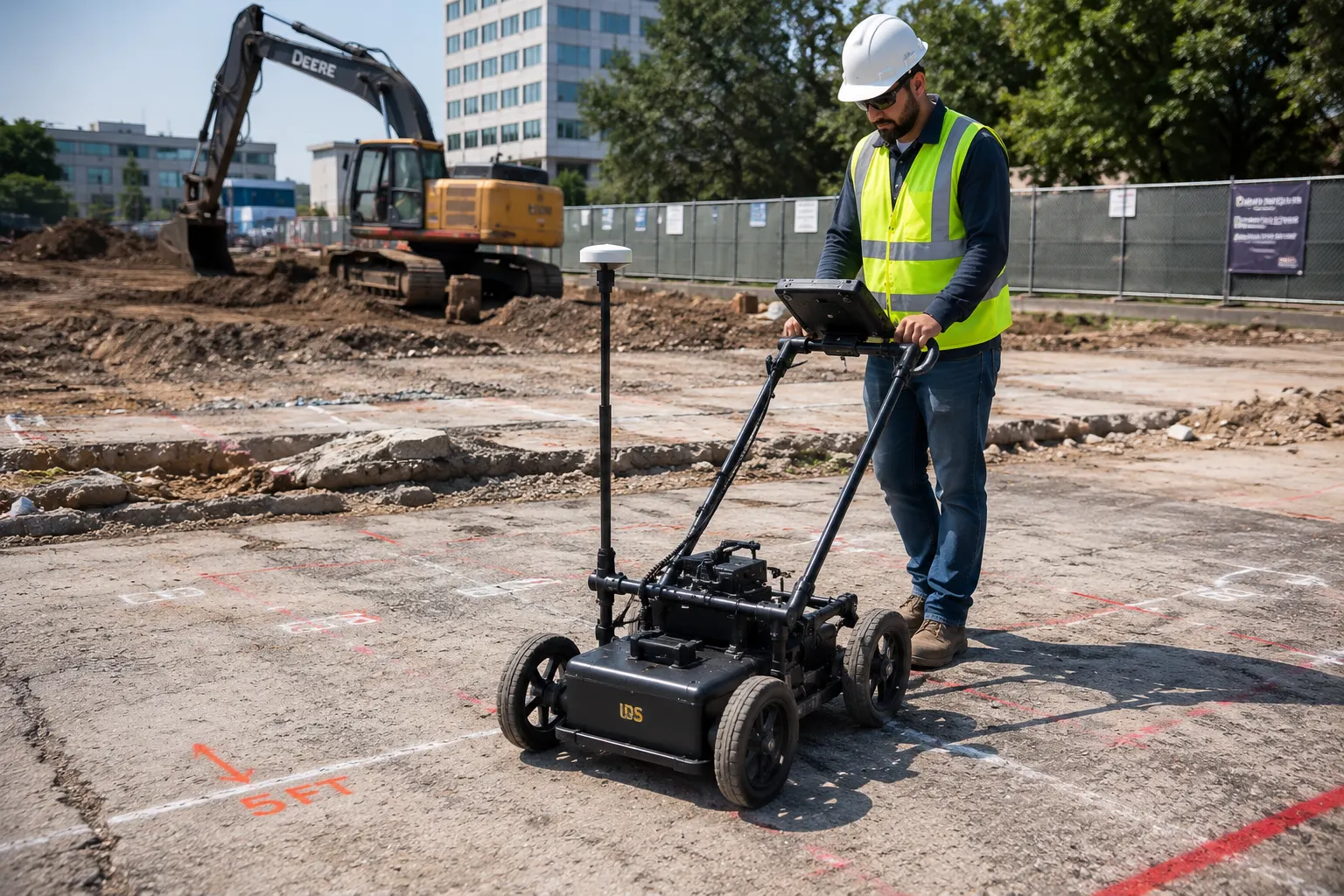
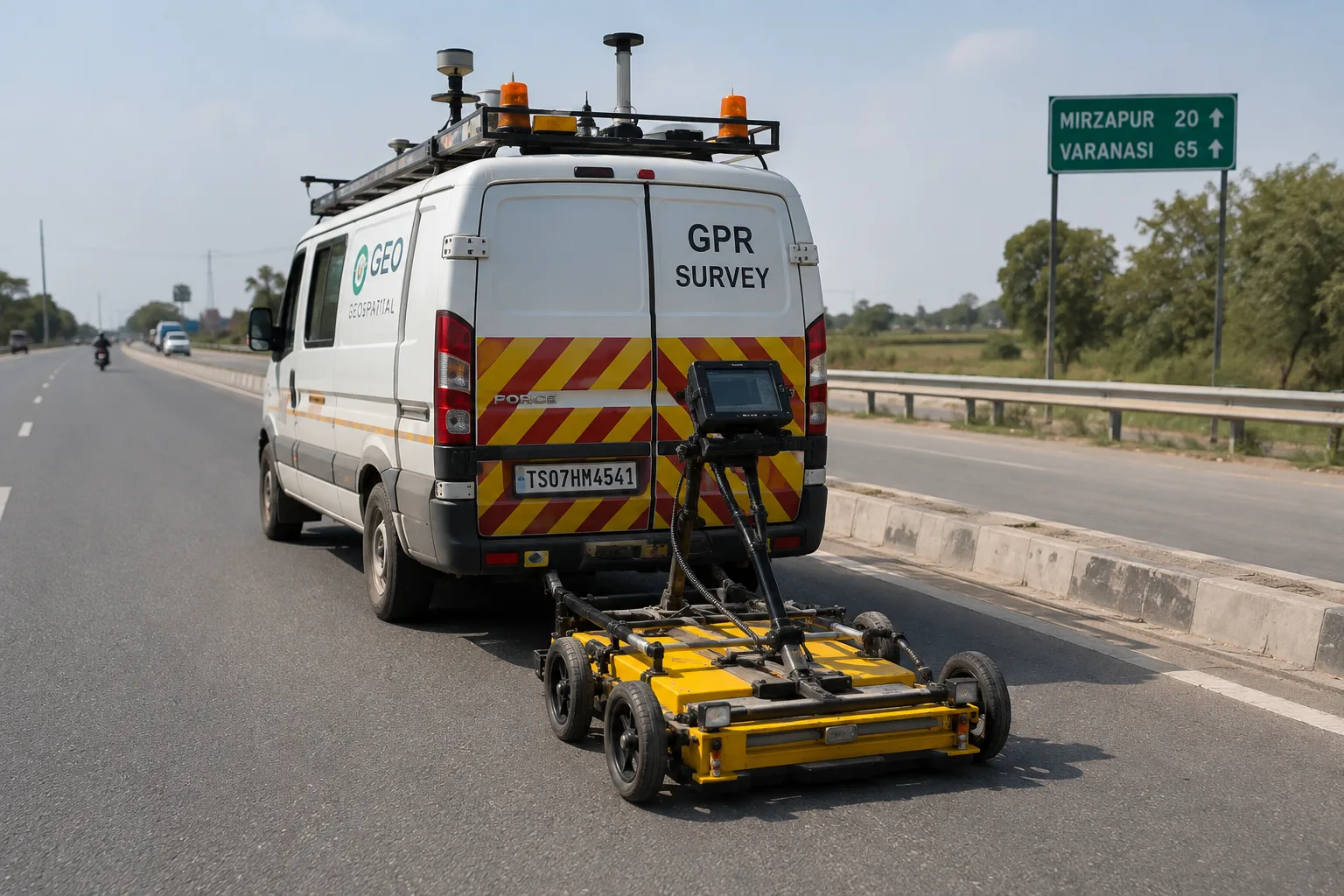
GPR survey for solar projects is a non-destructive geophysical scanning method used to investigate subsurface conditions across a proposed solar plant footprint. It identifies existing underground utilities, buried debris, old foundations, and soil variations before piling, module mounting, and cable trenching activities begin.
Why Solar EPC Companies Need GPR Survey
Solar sites — especially brownfield or previously developed land — often contain unknown underground utilities, agricultural drainage lines, or buried debris. Without a pre-construction GPR survey, piling rigs and trenching crews risk hitting these obstructions, causing costly delays across the project timeline.
- Prevents piling rig damage from unknown buried obstacles
- Protects existing utility lines running through or near the site
- Reduces rework and schedule slippage during civil works
- Supports accurate layout planning for module rows and cable routes
- Improves safety for site crews during excavation and trenching
What GPR Detects on Solar Sites
- Underground water, drainage, and irrigation lines
- Existing electrical and telecom cables crossing the site
- Buried debris, old foundations, and construction waste
- Soil stratification relevant to pile depth planning
- Voids or loose fill zones beneath proposed module rows
GPR Survey for Solar Piling & Foundation Areas
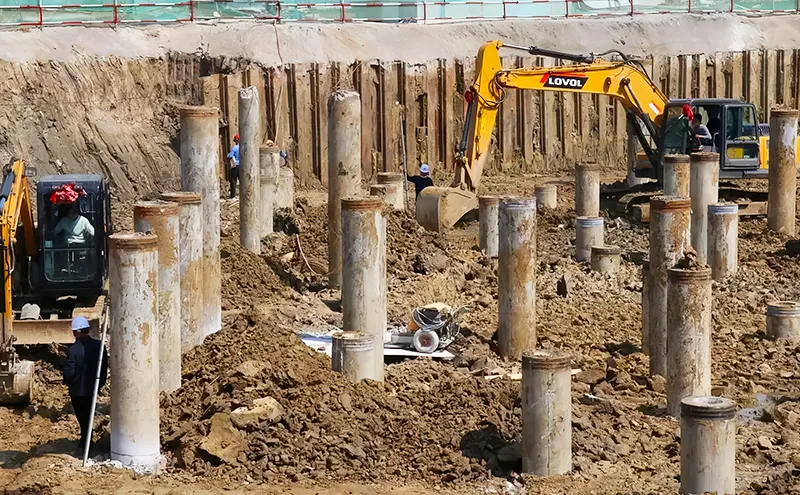
Before pile driving or foundation casting for module mounting structures, a GPR survey across each row alignment confirms the ground is clear of obstructions. This is particularly valuable on agricultural or previously used land, where old drainage pipes, buried rocks, or debris are common and not visible on the surface.
GPR for Underground Cable Trenching Routes
Solar plants rely on extensive underground DC and AC cable networks connecting module strings to inverters and the substation. GPR survey along planned trenching routes identifies existing utilities and obstructions in advance, allowing trenching crews to work safely and avoid costly utility strikes.
GPR Survey Process for Solar Sites
- Review of site layout, module row alignment, and cable routing plans
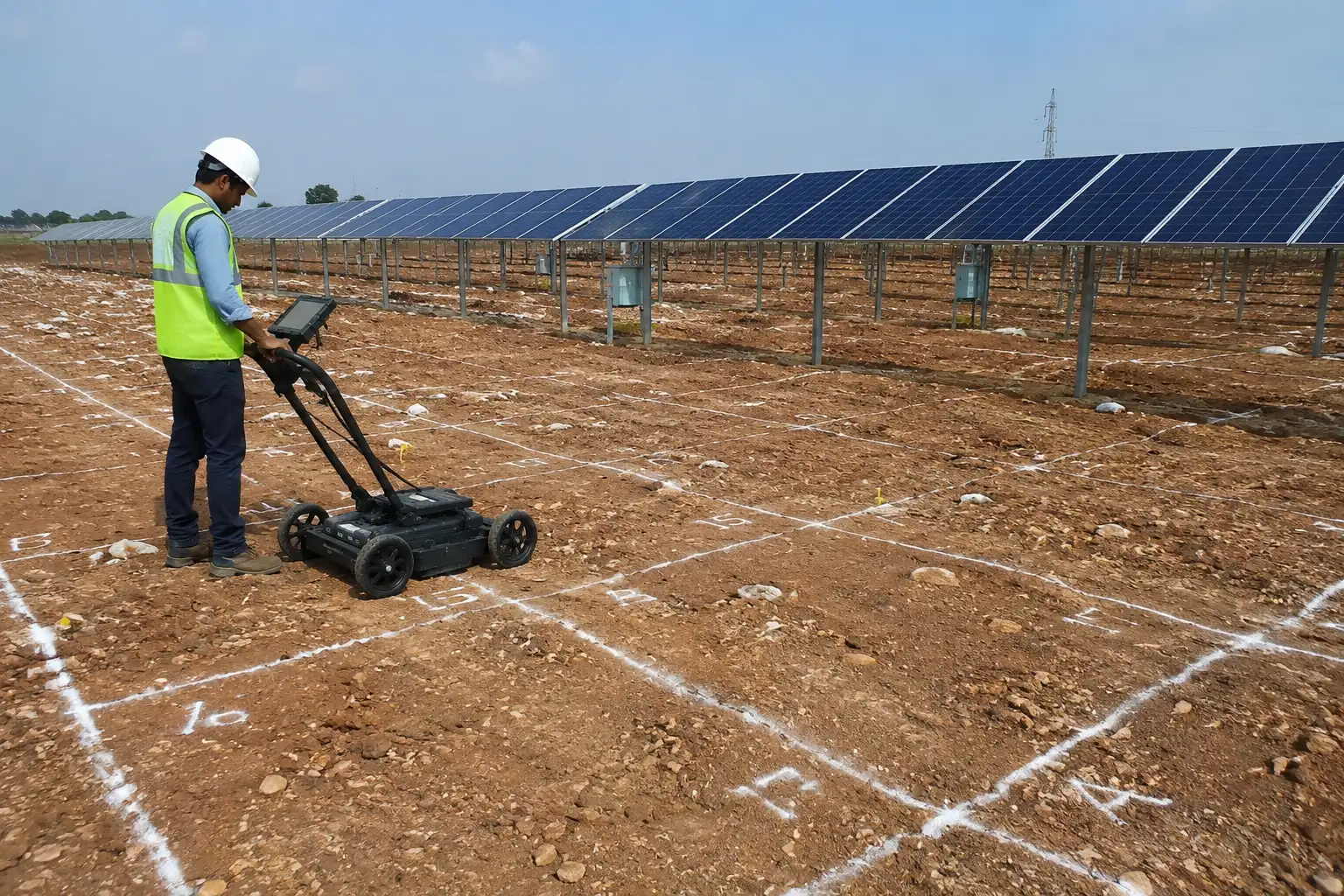
- Grid-based GPR scanning across piling zones and trenching corridors
- Real-time subsurface data capture and on-site marking
- Data interpretation and detailed subsurface report
- Recommendations for safe piling and trenching zones
Benefits of GPR Survey for Solar Projects
- Minimizes construction delays from unexpected underground obstructions
- Protects existing utilities and third-party infrastructure
- Supports accurate civil works planning and budgeting
- Non-invasive — no excavation required before construction begins
- Improves overall project safety and execution confidence
Applications in Ground-Mounted & Rooftop Solar
- Ground-mounted utility-scale solar plants
- Solar carports and elevated mounting structures
- Rooftop solar cable routing through structural slabs
- Floating and agrivoltaic solar site assessments
- Brownfield site redevelopment for solar use
Choosing a GPR Provider for Solar Projects
Solar EPC timelines are tight, so choosing a GPR provider experienced with large-area scanning, agricultural and mixed soil conditions, and clear turnaround reporting is essential. GeoSpectra's geotechnical engineers combine GPR data with broader site investigation experience to deliver actionable, construction-ready reports.
Conclusion
A GPR survey before solar plant construction is a small investment that protects your piling schedule, cable trenching plan, and overall project timeline. For solar EPC companies working against tight commissioning deadlines, this upfront clarity is one of the most effective risk-reduction steps available.