Published by Geospectra Geotechnical Pvt. Ltd.
What is Piling in Construction? Types, Methods & Foundation Engineering Guide
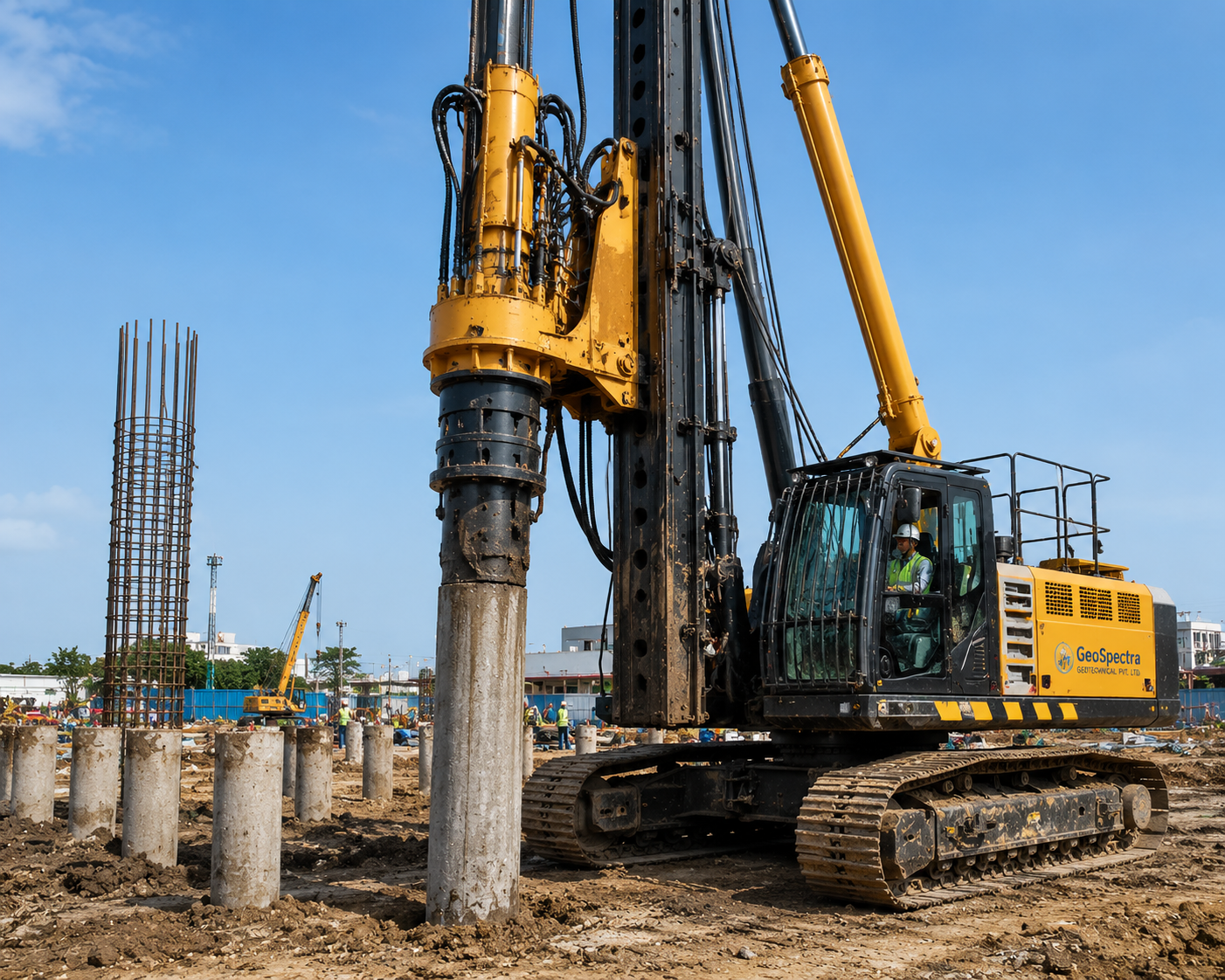
Modern structures depend on strong foundations to safely transfer loads into the ground. When near-surface soils cannot adequately support structural loads, engineers adopt piling systems to reach deeper and stronger strata. Piling is one of the most widely used deep foundation techniques for buildings, bridges, industrial facilities, solar projects, retaining structures, marine works, and infrastructure developments.
A properly designed pile foundation improves structural stability, controls settlement, increases bearing capacity, and ensures long-term performance even in challenging ground conditions.
What is Piling?
Piling is a foundation construction method in which long structural elements called piles are installed into the ground to transfer building loads to competent soil layers or rock formations located at greater depths.
Unlike shallow foundations such as isolated footings or raft foundations, pile foundations are designed to bypass weak surface soils and safely transfer loads through end-bearing resistance, skin friction resistance, or a combination of both mechanisms.
Pile design and construction in India are generally carried out in accordance with IS 2911 (Code of Practice for Design and Construction of Pile Foundations), which provides guidelines for various pile types and foundation design considerations.
Why is Piling Required?
Engineers recommend pile foundations when conventional shallow foundations cannot safely support the design loads or when settlement needs to be controlled.
- Low bearing capacity of surface soils
- Heavy structural loads from buildings and industrial facilities
- High groundwater conditions
- Soft clay, loose sand, or filled-up ground
- Bridge and marine structures
- High-rise construction projects
- Solar plant foundations
- Sites vulnerable to differential settlement
Common Ground Problems Solved by Piling
Pile foundations are frequently used to overcome challenging soil and site conditions that cannot be safely supported by shallow foundations.
- Soft clay deposits
- Loose sandy soils
- Black cotton soil
- Filled-up land and reclaimed areas
- High groundwater table
- Heavy industrial loads
- Bridge and marine construction
Why Geotechnical Investigation is Required Before Piling
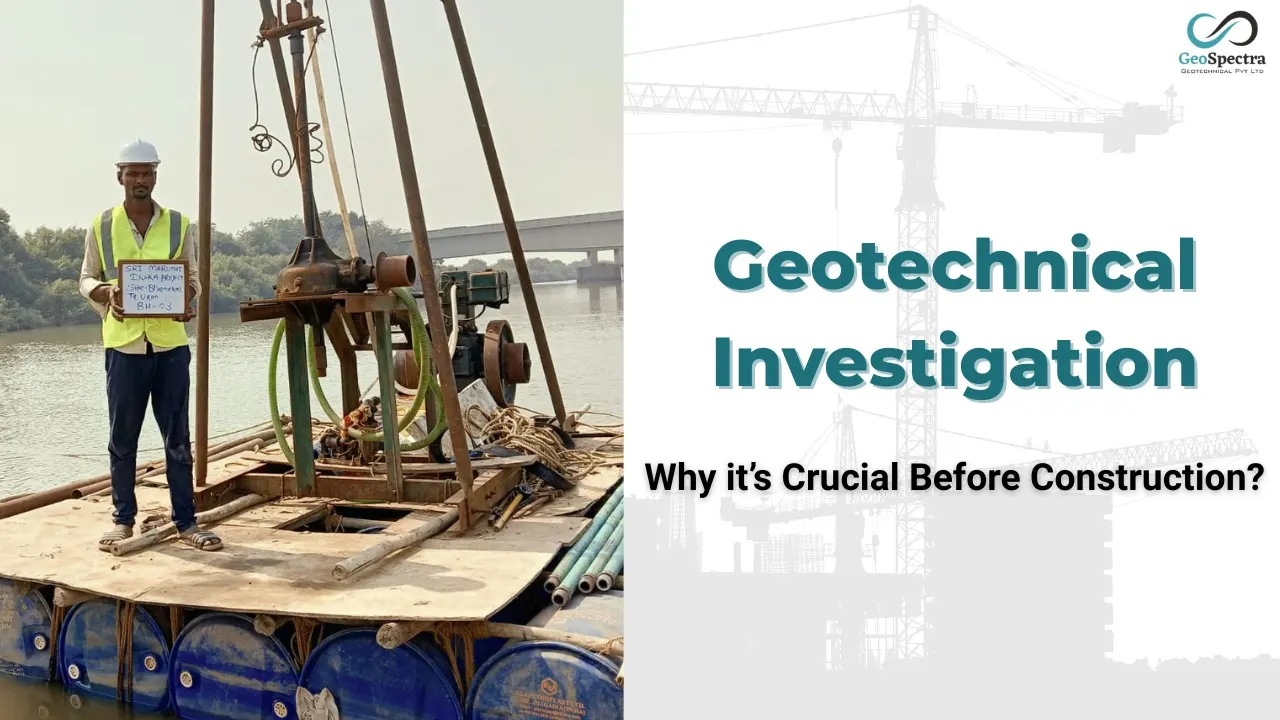
Before selecting any pile type, engineers conduct a detailed geotechnical investigation to understand subsurface conditions. Borehole drilling, Standard Penetration Tests (SPT), groundwater measurements, and laboratory testing help determine pile depth, diameter, and load carrying capacity.
Without proper soil investigation, pile design may become unsafe or unnecessarily expensive. Geotechnical data helps engineers select the correct pile type, optimize pile depth, and ensure compliance with design requirements.
Common Types of Piling Used in Construction
Bored Cast-in-Situ Piling
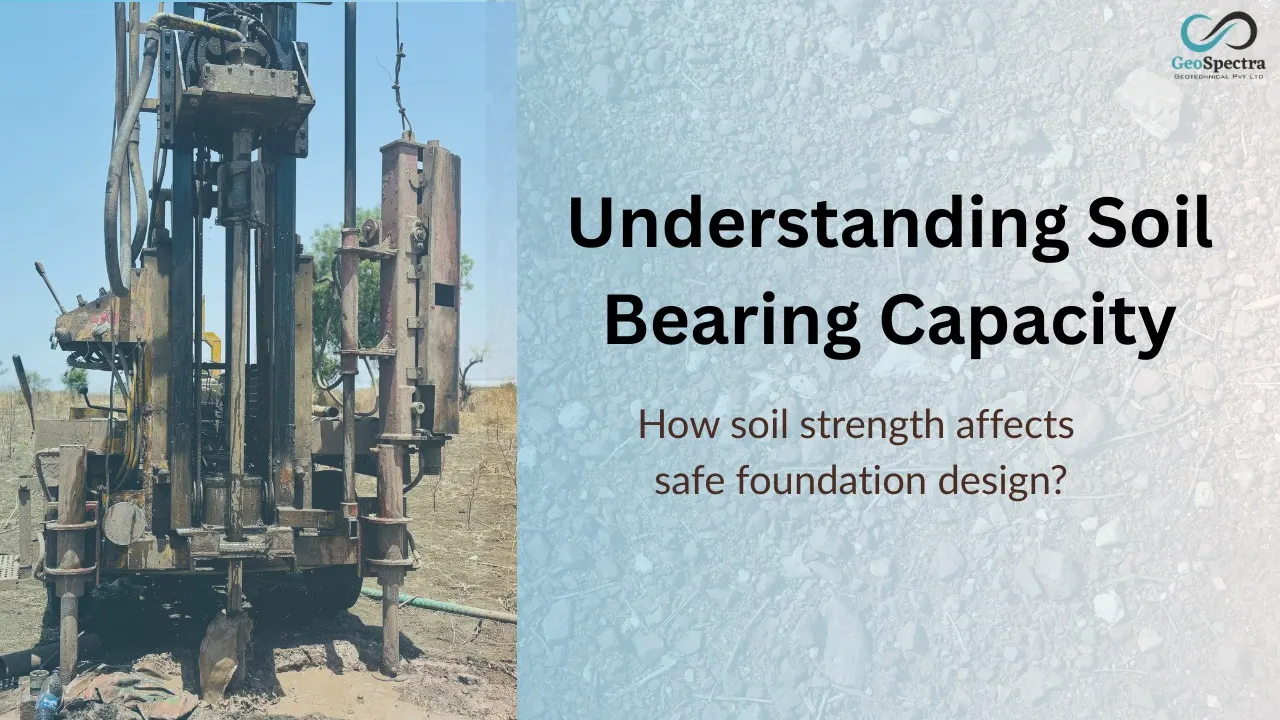
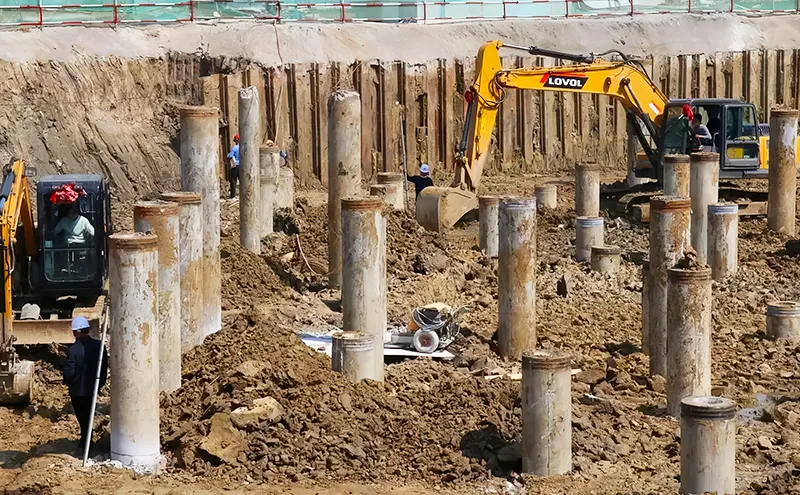
Bored Cast-in-Situ piles are constructed by drilling a borehole to the required depth, placing reinforcement cages, and subsequently filling the bore with concrete. This method offers high load carrying capacity and is extensively used in commercial, industrial, and infrastructure projects.
- Minimal vibration during construction
- Suitable for congested urban locations
- Large diameter pile options available
- Excellent load-bearing performance
Hydraulic Piling
Hydraulic piling utilizes advanced hydraulic equipment to install piles accurately and efficiently. The method minimizes noise, improves productivity, and is suitable for both urban and remote construction projects.
DMC Piling (Direct Mud Circulation)
DMC piling involves continuous circulation of drilling fluid to stabilize boreholes during excavation. This method is particularly effective in loose soils, sandy formations, and locations with high groundwater levels.
TMR Piling
TMR piling provides an economical foundation solution for light and medium-load structures. The technique is commonly used where rapid installation and cost efficiency are important.
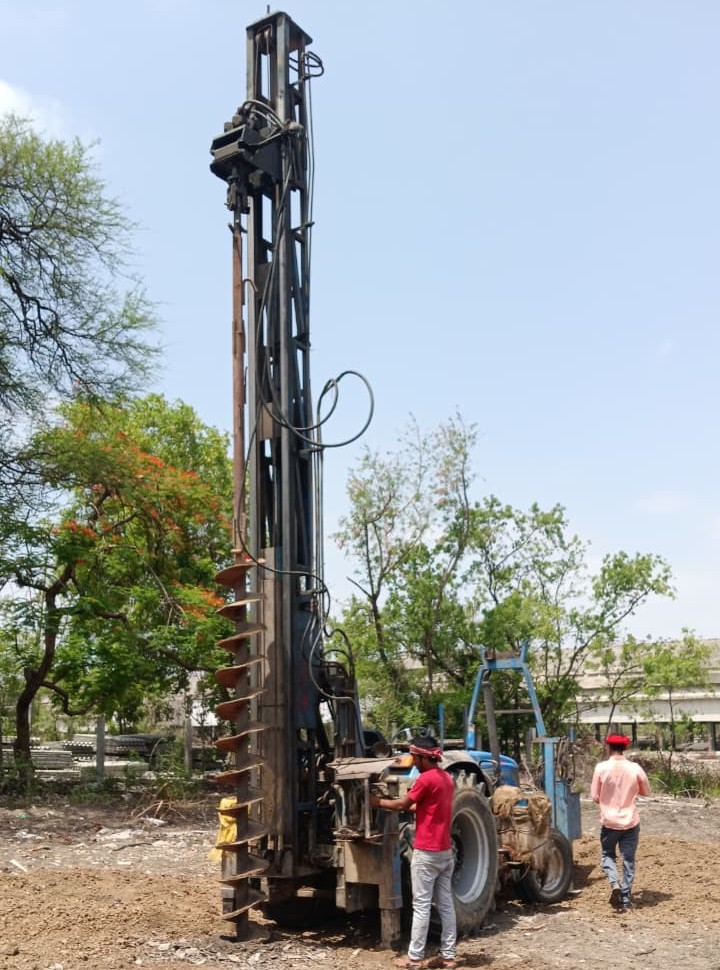
Tractor Mounted Piling
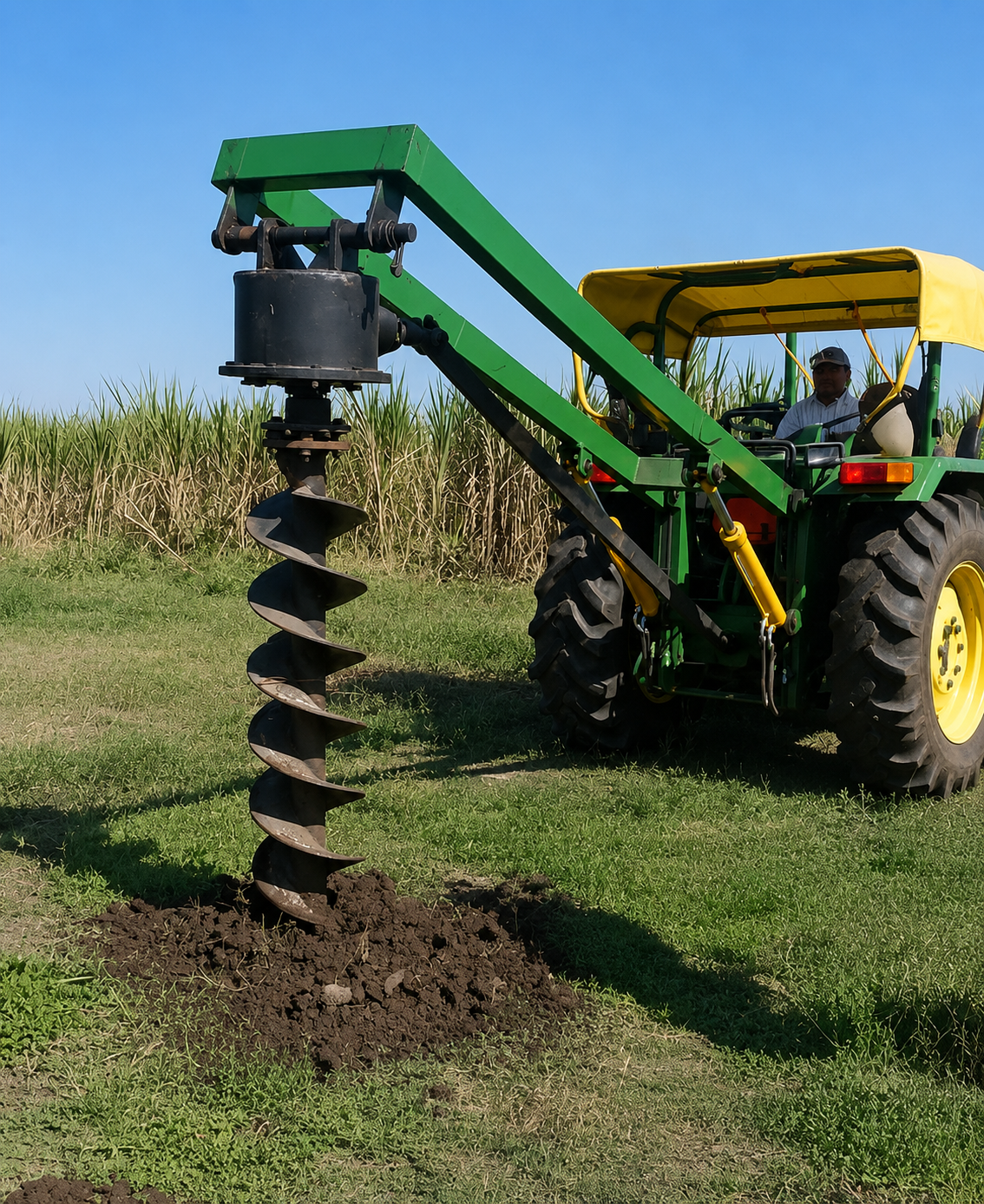
Tractor piling systems offer excellent mobility and are frequently used in remote areas, rural projects, and sites where large piling rigs cannot easily access the location.
Manual Piling
Manual piling is generally adopted for smaller projects and confined locations where heavy machinery cannot be deployed. It remains a practical solution for shallow foundation applications.
Sheet Piling
Sheet piling consists of interlocking steel sheets driven into the ground to form retaining walls and groundwater barriers. These systems are extensively used in deep excavations, cofferdams, basements, marine structures, and waterfront projects.
Timber Pile Foundations
Timber piles are suitable for lightweight structures, temporary works, and environmentally sensitive projects. Proper preservation treatment significantly enhances their durability.
Piling for Solar Projects
Ground-mounted solar installations frequently utilize steel driven piles or screw piles to support photovoltaic structures. These systems enable fast installation, reduced excavation, and long-term stability.
How Do Piles Transfer Structural Loads?
Piles support structures through two primary load transfer mechanisms:
- End Bearing: Loads are transferred directly to hard soil or rock at the pile tip.
- Skin Friction: Loads are transferred through friction developed between the pile surface and surrounding soil.
Most practical pile foundations rely on a combination of both end-bearing and skin-friction resistance to achieve the required load carrying capacity.
Advantages of Pile Foundations
- Suitable for weak soil conditions
- Supports very heavy structural loads
- Controls excessive settlement
- Provides long-term stability
- Suitable for high groundwater environments
- Improves foundation safety and reliability
- Applicable for bridges, towers, industrial plants, and high-rise buildings
Applications of Pile Foundations
- Residential Towers
- Commercial Buildings
- Industrial Facilities
- Warehouses
- Solar Power Plants
- Bridges and Flyovers
- Marine Structures
- Retaining Structures
- Infrastructure Projects
How Engineers Select the Right Piling Method
Selection of the appropriate piling system begins with a detailed geotechnical investigation. Engineers evaluate:
- Soil stratification and borehole data
- Safe bearing capacity
- Groundwater conditions
- Structural loading requirements
- Construction access limitations
- Environmental considerations
- Project timeline and budget
Borehole drilling, Standard Penetration Tests (SPT), laboratory soil testing, and geotechnical analysis play a critical role in determining the most suitable pile type and installation method.
Quality Control in Piling Works
Quality control is an essential part of every piling project. Proper inspection and monitoring help ensure that the installed piles meet design specifications and perform safely throughout the life of the structure.
- Verification of pile location and alignment
- Checking borehole depth
- Inspection of reinforcement cages
- Concrete quality monitoring
- Pile integrity testing
- Load testing as per project specifications
Proper quality control ensures the foundation performs as intended throughout the design life of the structure.
Importance of Pile Load Testing
After installation, piles are tested to verify their performance and confirm that the foundation meets design requirements. Testing is generally carried out in accordance with IS 2911 recommendations.
- Initial Load Test
- Routine Load Test
- Compression Load Test
- Tension Load Test
- Lateral Load Test
- Pile Integrity Test (PIT)
- Dynamic Load Test (DLT)
Proper pile testing helps verify design assumptions, identify construction issues, and ensure long-term foundation reliability.